Meaning and Purpose
What is the deeper intention behind what I do, or what we do, and how does it truly serve the living world and the common good?
Start with why. A purpose that serves only ourselves is not yet a purpose: it is an interest.
A compass for everyone. Ask them before a decision, during a project, or at the end of a cycle—alone, as a family, as a team, or as a council.

What is the deeper intention behind what I do, or what we do, and how does it truly serve the living world and the common good?
Start with why. A purpose that serves only ourselves is not yet a purpose: it is an interest.

How can I bring my needs, or those of our group, into harmony with those of others, of society, and of nature?
Neither self-sacrifice nor selfishness: the right point lies where my needs and those of others can live together.

What are the consequences of my choices—in the short, medium, and long term—at the ecological, social, economic, and cultural levels?
Look further than the next quarter and further than your own perimeter: costs pushed onto others do not disappear.

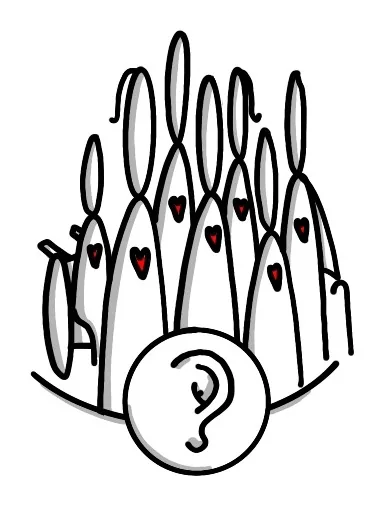
Who has not yet been heard or taken into account, and how can we give them a voice that truly influences the decision?
Map those involved, those affected, and those absent—future generations, non-human beings, the most vulnerable.

What share of personal or collective responsibility do we take on, and how do we make it visible, so that it truly commits us?
Responsibility that no one can see is responsibility no one carries. Make it explicit, shared, and accountable.

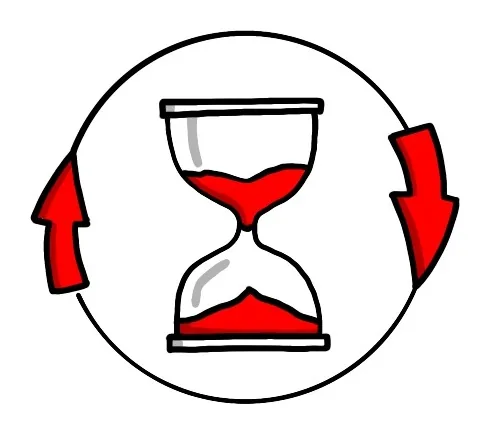
Where are we in the natural cycle of this project or this community, and what is the right rhythm for the next step?
Every project has its season: launch, growth, maturity, renewal. Acting at the right rhythm avoids both haste and inertia.

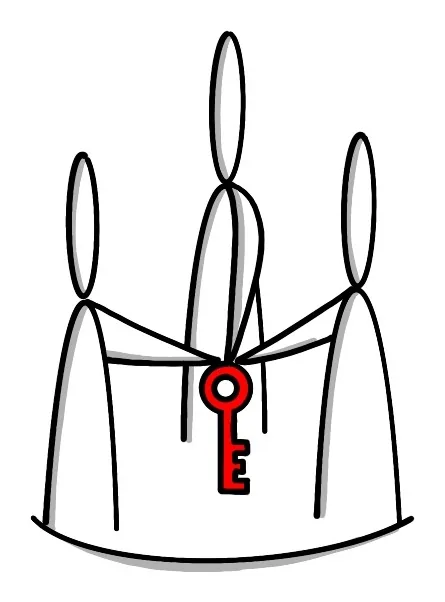
How do we distribute the domains of power so that decisions are made by consent rather than through coercion or inertia?
Power shared by consent is not weaker: it is more legitimate, and decisions hold better over time.

In what way does what we create contribute not only to “destroying less” but to regenerating human and natural resources?
“Less bad” is not yet good. Ask what your activity gives back to people, relationships, and the living world.

What do we want to leave as our legacy—values, knowledge, practices—and how are we already demonstrating it in the way we act?
What we pass on is what we do, not what we say. Example is the most durable form of teaching.

Does this action nourish joy, the élan of life, and beauty—signs of conscious balance rather than of mere performance?
Joy is not a luxury: it is a signal. Where vitality disappears, balance has usually been lost.
Rate each question from 1 (needs strengthening) to 5 (fully integrated) and see your conscious balance radar instantly.
Open the scorecard →Illustrations: Lars Hoop. Canonical wording: chapter 8 of the white paper.
Join the conversation
Which question challenges you the most today? Share an example from your life or your organization.
The discussion is provided by Cusdis, a privacy-friendly service without advertising or tracking. It is loaded only when you click below. Privacy